Pour Over Coffee Grind: What Size to Use
Learn the right pour over coffee grind size, what it should look like, and how to adjust finer or coarser when your cup tastes off.
 The Foundiny Genie6 min read1,253 words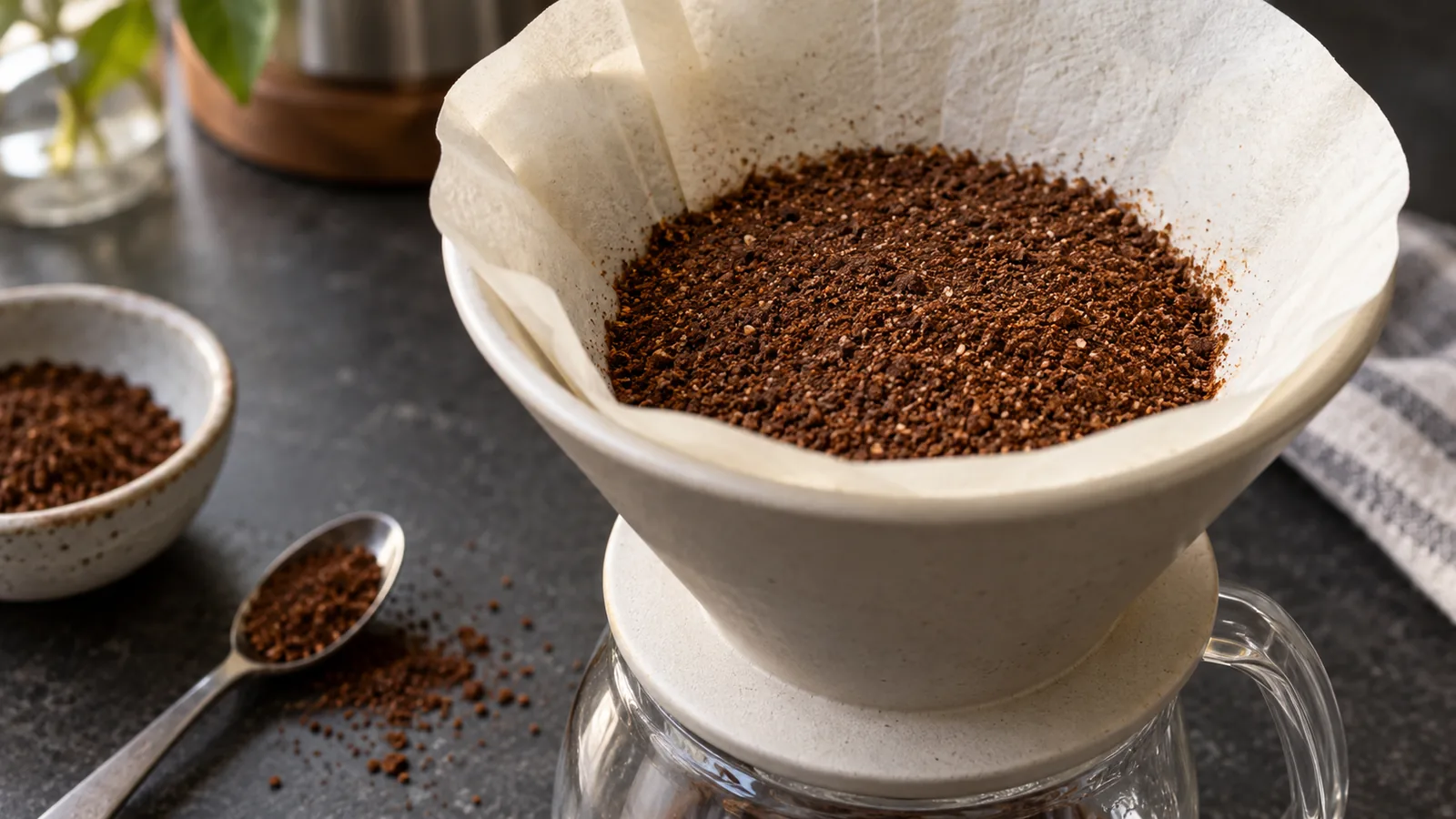
Category
Review
Read
6 min
Updated
Oct 4, 2026
What we check
Pricing, fit, review signal, and tradeoffs.
Bias policy
Affiliate links never change the verdict.
Best use
A fast read before you buy.
Use a medium to medium-fine grind for pour over coffee. It should look finer than coarse sea salt, but not as powdery as espresso.
If your coffee tastes sour, sharp, or thin, grind a little finer. If it tastes bitter, harsh, muddy, or drains too slowly, grind a little coarser.
The right pour over coffee grind is not one fixed setting, because every grinder is different. Start with the right look, then adjust by taste and how the water flows through the coffee bed.
Pour over coffee grind size, quick answer
Pour over coffee usually uses a medium to medium-fine grind. Think of it as a little finer than table salt mixed with sand, but not dust-like.
For a cone-shaped pour over, you will often move toward medium-fine. For a larger brewer or a Chemex coffee grind, you may need something closer to medium, because the filter is thicker and the brew bed can be wider.
Do not worry about finding one perfect number on your grinder. A Baratza Encore pour over setting, or any other grinder setting, can vary by beans, burr age, and brew style. Use the setting as a starting point, then adjust.
What pour over grind should look like
A good pour over grind should look even, gritty, and easy to see as small pieces. It should not look like flour. It should also not look like large flakes or chunks.
Use these simple visual checks:
- Too fine: powdery, dusty, clumps easily, close to espresso grind
- About right: fine sand, small even grains, slightly gritty
- Too coarse: large pieces, closer to coarse sea salt, water runs through fast
Grinder numbers can help, but they are not the final answer. One grinder’s medium setting may act like another grinder’s medium-fine setting. Your cup taste and water flow matter more than the number.
How to adjust pour over grind by taste
Taste is the easiest way to fix your pour over grind. Change only the grind first. Keep the coffee amount, water amount, water temperature, and pouring style the same while you test.
| What you notice | Likely grind issue | Next change to make | |---|---|---| | Sour taste | Too coarse | Grind one step finer | | Weak cup | Too coarse or uneven | Grind one step finer | | Bitter taste | Too fine | Grind one step coarser | | Harsh finish | Too fine or over-extracted | Grind one step coarser | | Muddy cup | Too fine or too many fines | Grind one step coarser | | Fast-draining brew | Too coarse | Grind one step finer | | Slow-draining brew | Too fine | Grind one step coarser |
Make small changes. One click, notch, or small move on your grinder is usually enough for the next test.
How brew time helps you check the grind
Brew time is a useful clue, but it should not be the only thing you use. A pour over that drains very fast is often too coarse. The water passes through before it can pull enough flavor from the coffee.
A pour over that drains very slowly is often too fine. The water gets held up, which can make the cup taste bitter, dry, harsh, or muddy.
Still, taste comes first. Some coffees drain slower or faster because of the bean, roast level, filter, or brewer shape. If the cup tastes balanced to you, the grind is doing its job.
A pour over also needs steady hot water. If you are choosing gear for better control, see the Cosori electric kettle review.
A simple test for your next cup
Here is an easy way to dial in your pour over grind without guessing.
Brew one cup the way you normally do. Keep the same coffee amount, water amount, filter, brewer, and pouring style. Taste the cup before changing anything.
If it tastes sour and thin, move the grinder one step finer. Brew again with everything else the same. If the second cup tastes fuller and sweeter, you moved the right way.
If the first cup tastes bitter or harsh, move one step coarser instead. Brew again and taste. If the bitterness drops and the cup feels cleaner, stay near that setting.
Only change one thing at a time. If you change the grind, water, dose, and pouring style all at once, you will not know what helped.
Common pour over grind mistakes
The biggest mistake is changing too many things at once. If a cup tastes off, start with grind size before changing every part of your recipe.
Another mistake is using espresso-fine grounds. Espresso grind is too fine for most pour over brewers. It can slow the drain, clog the filter, and make the cup taste bitter or muddy.
Very coarse grounds can cause the opposite problem. Water runs through too quickly, and the coffee may taste sour, weak, or hollow.
It is also easy to ignore the cup and follow a setting number too closely. A suggested setting is only a starting point. Your coffee should guide the final adjustment.
When a better grinder can help
A consistent grinder makes pour over easier to adjust. When the grounds are more even, water moves through the coffee bed more evenly. That makes it easier to tell if you should go finer or coarser.
If your grinder makes a lot of dust mixed with large chunks, your cup can taste bitter and weak at the same time. That is hard to fix with settings alone, because the tiny pieces and large pieces brew at different speeds.
You do not need a product list to fix today’s cup. Start with the grind you have, adjust by taste, and make small changes. If you are ready to compare grinder basics and decide what type fits your routine, use the Foundiny coffee grind guide. You can also browse coffee maker reviews if you are building a simple home coffee setup.
Frequently asked questions
What grind is best for pour over coffee?
Use a medium to medium-fine grind for most pour over coffee. It should look like fine sand, not powder and not large chunks. If the cup tastes sour or weak, grind finer. If it tastes bitter or muddy, grind coarser.
Is pour over grind coarse or fine?
Pour over grind is usually in the middle, leaning medium-fine. It is finer than a French press grind, but coarser than espresso. A Chemex coffee grind may be closer to medium because the thicker filter can slow the flow.
What happens if pour over grind is too fine?
If the grind is too fine, water may drain slowly through the coffee. The cup can taste bitter, harsh, dry, or muddy. Try moving one step coarser and brew again with everything else the same.
What happens if pour over grind is too coarse?
If the grind is too coarse, water can run through too quickly. The coffee may taste sour, thin, or weak because the water did not pull enough flavor from the grounds. Move one step finer and taste again.
How do I fix bitter pour over coffee with grind size?
Bitter pour over coffee often means the grind is too fine. Move your grinder one step coarser, then brew again without changing the other steps. If the cup tastes cleaner and less harsh, keep adjusting in small moves until it tastes balanced.
Get the next shortlist before you shop.
Top-scored products, honest reviews, zero fluff.
Foundiny may earn a commission from purchases made through affiliate links on this page. This does not influence our scores or reviews.
More from the journal
Related reviews
Hand Grinder Guide for Better Coffee at Home
Learn what a hand grinder does, who should buy one, how to choose the right grind size, and when electric may be a better fit.
Oct 1, 2026|7 min read
Chemex Bonded Filter Review: Worth the Premium?
We tested the Chemex Bonded Filter against cheaper alternatives. 4.8 stars from 9,023 reviews. Here's what 20-30% thicker paper actually does for your coffee.
Sep 30, 2026|5 min readMcCafe Premium Roast Ground Coffee Review: 30oz Value Pack
McCafe Premium Roast delivers consistent medium roast flavor at $0.73 per ounce. We tested the 30oz canister against premium brands. Read our honest review.
Sep 30, 2026|5 min read