Hand Grinder Guide for Better Coffee at Home
Learn what a hand grinder does, who should buy one, how to choose the right grind size, and when electric may be a better fit.
 The Foundiny Genie7 min read1,436 words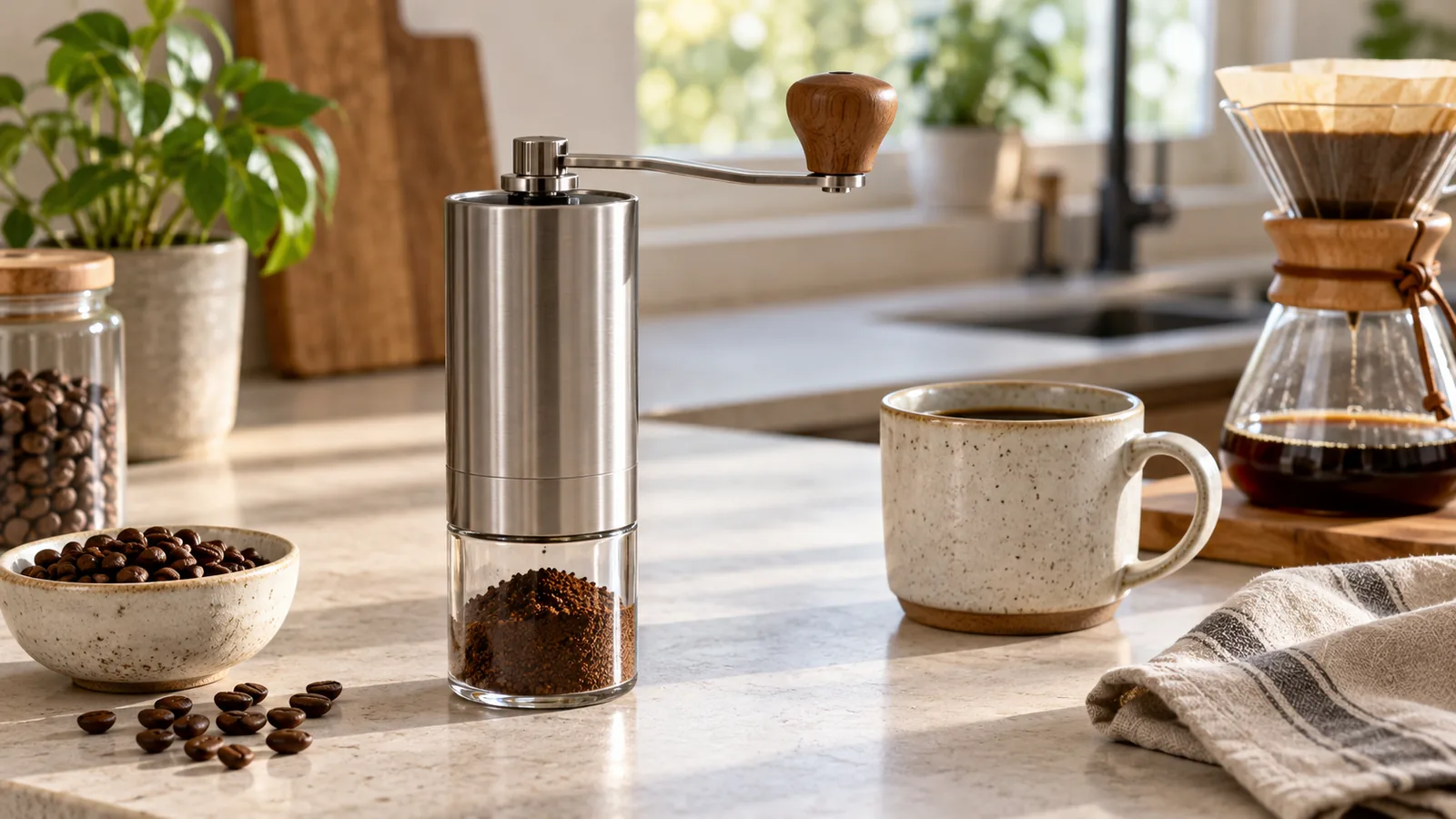
Category
Review
Read
7 min
Updated
Oct 1, 2026
What we check
Pricing, fit, review signal, and tradeoffs.
Bias policy
Affiliate links never change the verdict.
Best use
A fast read before you buy.
A hand grinder is a coffee grinder you turn by hand. It crushes whole coffee beans into grounds, so you can brew fresher coffee without taking up much space or using power.
A hand grinder can be a good fit if you make one or two cups, travel often, have a small kitchen, or want quiet mornings. Choose one by how you brew coffee, how much coffee you make, how easy it is to turn, and how simple it is to clean.
Hand grinder: quick answer
A hand grinder is a small coffee grinder with a crank handle. You add whole beans, turn the handle, and collect the ground coffee in the bottom cup.
Look for burrs, not spinning blades. Burrs crush beans into more even pieces, which helps your coffee taste more balanced. A premium hand coffee grinder often has stronger burrs, smoother grind settings, and a sturdier body, but you still need to match it to how you brew.
If you make espresso, choose carefully. Espresso needs finer, more controlled grinding than drip, pour over, French press, or cold brew.
What a hand grinder does
A hand grinder turns coffee beans into ground coffee. The main job is to make the grounds the right size for your brew method.
Fine grounds work for espresso because the water moves through quickly under pressure. Medium grounds work for many drip coffee makers and pour over brewers. Coarse grounds work for French press and cold brew because the coffee sits in water longer.
If you already know how you make coffee, choose a grinder that fits that method. If you are still picking your brewer, browse Foundiny’s coffee maker reviews to match your grinder to your setup.
| Brew method | Grind to aim for | What to check in a hand grinder | |---|---|---| | Espresso | Fine | Small grind steps and strong burrs | | Pour over | Medium to medium fine | Easy adjustment and even grounds | | Drip coffee maker | Medium | Simple settings and enough capacity | | AeroPress style brewing | Fine to medium | Flexible settings | | French press | Coarse | Coarse setting that does not make too much dust | | Cold brew | Extra coarse | Larger capacity helps if you make batches | | Travel coffee | Depends on brewer | Compact size and easy cleaning |
Who should buy a hand grinder
A hand grinder makes sense if you want fresh coffee but do not want another big appliance on the counter. It is also useful if you live with people who sleep later, because hand grinding is usually quieter than electric grinding.
You may like one if you:
- Make one or two cups at a time
- Want to hand grind coffee beans right before brewing
- Have a small kitchen or limited counter space
- Travel, camp, or make coffee at work
- Want more control than pre-ground coffee gives you
- Do not mind a small morning task
A large hand grinder can help if you make more coffee at once, but it still takes effort.
Who should not buy a hand grinder
A hand grinder is not right for everyone. If you make coffee for several people every morning, turning the handle can get old quickly.
You may want an electric grinder instead if you:
- Make many cups every day
- Want the least effort possible
- Need coffee ground quickly
- Have hand, wrist, or grip pain
- Often grind for a full pot
- Want push-button ease
A hand grinder can still make good coffee, but the tradeoff is effort. The more beans you grind, the more that tradeoff matters.
How to choose a hand grinder
Start with your brew method, then check the parts that affect daily use. A grinder can look nice and still be annoying if it is slow, hard to turn, or hard to clean.
Use this buying checklist:
- Burrs: Choose burrs over blades for more even grounds.
- Grind settings: Look for settings that match your brew method.
- Capacity: Pick a size that holds enough beans for your usual cup or pot.
- Handle comfort: A longer, smooth handle is easier to turn.
- Build: A sturdy body feels better and may stay steady while grinding.
- Cleaning: Simple parts make upkeep easier.
- Travel size: Smaller grinders pack well, but hold fewer beans.
For example, if you make drip coffee, a medium grind, easy adjustment, and enough capacity for your brewer matter most. If you make French press, make sure the coarse setting is useful. If you make espresso, focus on fine control, not just size.
If you are ready to compare coffee grinding options, start with Foundiny’s compare coffee grinding options page.
Hand grinder vs electric grinder
A hand grinder is smaller, quieter, and does not need power. It can be easy to store in a drawer, take on a trip, or use in a small apartment.
An electric grinder is easier when you grind more coffee. You press a button instead of turning a handle, so it is better for full pots, busy mornings, or homes with several coffee drinkers.
Here is the simple choice: pick a hand grinder for space, quiet, travel, and small batches. Pick an electric grinder for speed, ease, and larger amounts.
Control depends on the model. A good hand grinder can give you useful control, but espresso still asks more from the grinder than most brew methods.
How to use a hand grinder
Using a hand grinder is simple, but small changes matter. Start with the grind size that matches your brewing method, then adjust after tasting.
- Set the grind size. Use fine for espresso, medium for drip or pour over, and coarse for French press.
- Measure your beans. Add only what you plan to brew.
- Add beans to the grinder. Keep it upright so beans feed evenly.
- Turn the handle. Use a steady pace instead of forcing it.
- Empty the grounds. Tap the catch cup gently if grounds stick.
- Brew and taste. If coffee tastes sour or weak, try a little finer. If it tastes bitter or harsh, try a little coarser.
- Brush out leftover grounds. This helps keep old coffee from affecting the next cup.
Where to go next
A hand grinder is worth considering if you want fresher coffee in a simple, quiet, and compact way. Choose by your brew method first, then think about capacity, comfort, cleaning, and travel size.
If you are building a simple home coffee setup, a grinder is only one part. Pour over and French press drinkers may also care about a steady kettle, and you can read Foundiny’s electric kettle review if that fits how you brew.
When you are ready, take the next step and compare coffee grinding options. You can use what you learned here to choose a grinder that fits your coffee, your space, and the way you want to make each cup.
Frequently asked questions
What is a hand grinder?
A hand grinder is a coffee grinder you operate by turning a handle. It uses burrs or blades to break whole coffee beans into grounds. Burr hand grinders are usually the better choice for coffee because they make the grind more even.
Is a hand grinder good for coffee?
Yes, a hand grinder can be good for coffee, especially if you grind beans right before brewing. Freshly ground coffee often has more aroma and flavor than coffee that was ground long before use. The grinder still needs to match your brew method.
How do you use a hand grinder?
Set the grind size, add whole beans, turn the handle, then use the grounds right away. After you taste the coffee, adjust the setting. Go finer if the cup tastes weak or sour, and coarser if it tastes bitter or harsh.
Is a hand grinder better than an electric grinder?
A hand grinder is better if you want quiet use, small size, travel-friendly gear, and no power cord. An electric grinder is better if you grind a lot of coffee or want less effort. The right choice depends on how much coffee you make.
Can a hand grinder grind for espresso?
Some hand grinders can grind for espresso, but not all. Espresso needs very fine grounds and small, controlled adjustments. If espresso is your main drink, choose a grinder made with fine control in mind.
Get the next shortlist before you shop.
Top-scored products, honest reviews, zero fluff.
Foundiny may earn a commission from purchases made through affiliate links on this page. This does not influence our scores or reviews.
More from the journal
Related reviews

Chemex Bonded Filter Review: Worth the Premium?
We tested the Chemex Bonded Filter against cheaper alternatives. 4.8 stars from 9,023 reviews. Here's what 20-30% thicker paper actually does for your coffee.
Sep 30, 2026|5 min readMcCafe Premium Roast Ground Coffee Review: 30oz Value Pack
McCafe Premium Roast delivers consistent medium roast flavor at $0.73 per ounce. We tested the 30oz canister against premium brands. Read our honest review.
Sep 30, 2026|5 min readDunkin' Original Blend Ground Coffee Review: The Daily Driver
Dunkin' Original Blend delivers consistent medium roast flavor at $0.76 per ounce. We tested the 30oz canister against premium brands. Here's what we found.
Sep 29, 2026|5 min read