Buying guide
How to Choose the Best Coffee Accessories Products
A step-by-step guide to finding the right coffee accessories products. Covers what to look for, realistic price ranges, red flags, and our top-rated picks.
- 1
Define what you need from a coffee accessories product
Before browsing, write down the specific problem you want solved. Are you looking for convenience, quality, aesthetics, or a combination? Knowing your "why" keeps you from impulse buying something that looks great but doesn't fit your life.
- 2
Set a realistic budget range
Decide on a price range before you start comparing. For coffee accessories products, you'll typically find budget options under $15, mid-range between $15-40, and premium above $40. The most expensive option is rarely the best value.
- 3
Check materials and build quality
Read product descriptions carefully. Look for specific material callouts (stainless steel, BPA-free, medical-grade silicone) rather than vague claims like "premium quality." If the listing doesn't mention materials, that's a red flag.
- 4
Read reviews from verified buyers
Skip the 5-star reviews and read the 3 and 4-star ones first. These buyers actually used the product and share honest pros and cons. Look for recurring complaints. If multiple people mention the same issue, it's real.
- 5
Compare at least 3 alternatives
Never buy the first coffee accessories product you find. Compare at least three options on features, price, and reviews. Products that trend on TikTok often have lesser-known alternatives that perform just as well for less.
- 6
Look for return policies and warranties
Always check the return window before purchasing. A confident seller offers at least 30-day returns. No return policy or "all sales final" on a new product is a major red flag. Warranty coverage matters, especially on anything electronic.
- 7
Watch out for common red flags
Be cautious of products with only 5-star reviews (likely fake), listings with stock photos instead of real product images, prices that seem too good to be true, and sellers with no other products or store history.
Top-Rated Coffee Accessories Products
2 products scored and reviewed by Foundiny.
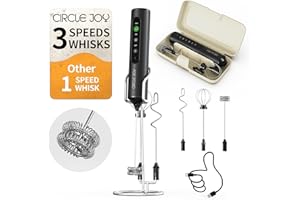
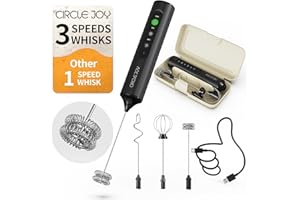
CIRCLE JOY Rechargeable Handheld Milk Frother Wand with Stand, 3 Variable Speeds, 3 Whisks and Storage Box, Electric Drink Mixer for Latte, Cappuccino, Hot Chocolate, Eggs and Protein Powder, Black